
FD30S Smoke Control Doorsets at a glance
| Fire resistance | 30 minutes (FD30 / E30) |
|---|---|
| Smoke control | Tested to BS 476-31.1 or BS EN 1634-3 (Sa) |
| Seals | Combined intumescent and brush or blade smoke seal |
| Typical use | Flat entrances, protected stairs, corridor doors |
| Closer | Overhead or concealed closer to BS EN 1154 |
| Guide price | £800–£1,250 per single doorset, supplied & fitted, ex VAT |
What does the S in FD30S mean?
The S shows the doorset passed a smoke leakage test at ambient temperature — BS 476-31.1 in the British system, or BS EN 1634-3 in the European one, where it is classified Sa. A typical FD30S doorset is written E30 Sa in an EN specification.
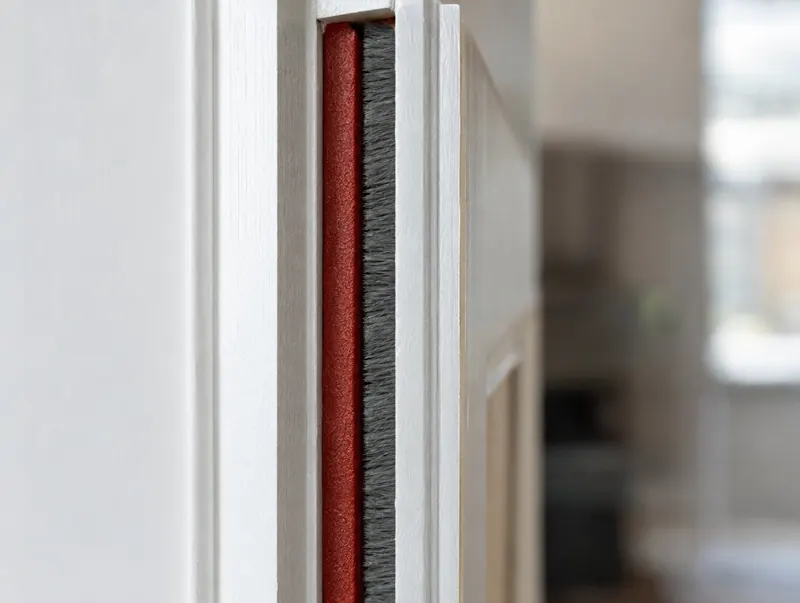
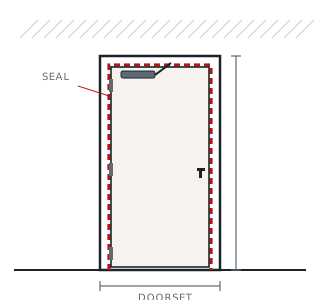
The smoke seal is usually a brush or blade strip combined with the intumescent strip in the frame or leaf edge. It only works if the gaps around the door stay tight and even, so installation quality matters as much as the product.
Where do you need FD30S?
- Flat entrance doors opening onto common corridors and lobbies
- Doors onto protected stairways in blocks of flats
- Cross-corridor doors that subdivide long escape corridors
- The door between a house and an integral garage
Your fire strategy decides. If you are replacing doors after a fire risk assessment, the assessor's recommendation tells us which rating each door needs.
Can smoke seals be added to an existing door?
Sometimes, using seals listed in the door's own test evidence. Where the door's provenance is unknown, adding seals does not create evidence that the assembly controls smoke. In that case a complete FD30S doorset is the reliable answer — and usually quicker to sign off.
FD30S doorset prices
Single FD30S doorsets typically cost £800 to £1,250 supplied and fitted, ex VAT. Flat entrance doors with security hardware and spyholes cost more — see our flat entrance fire doors.
Where are FD30S fire doors used?
- Protected stairways
- Cross-corridor doors
- Integral garage doors
- Lobby doors in blocks of flats
FD30S fire doors questions
What is the difference between FD30 and FD30S?
Both resist fire for 30 minutes. FD30S also has tested smoke seals that limit cold smoke passing around the leaf before the intumescent strip activates.
Do smoke seals stop the door closing?
They shouldn't. A properly hung FD30S door closes and latches under its closer. If seals are crushed or the door binds, it needs adjusting — a door that fails to latch is a failed fire door.
Is a threshold seal needed?
It depends on the doorset's test evidence. Some FD30S doorsets need a drop-down or threshold seal; others control smoke with a set threshold gap.
Which doors in a block of flats need FD30S?
Typically flat entrance doors and doors onto protected stairs and lobbies. The building's fire strategy is the final word.
Related doorsets
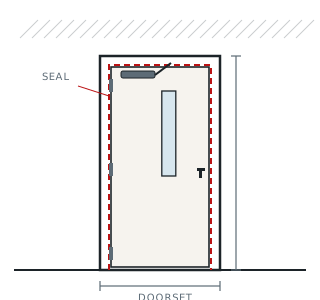
FD30 Fire Doorsets
30-minute certified doorsets — the workhorse of flats, offices and HMOs.
View doorsets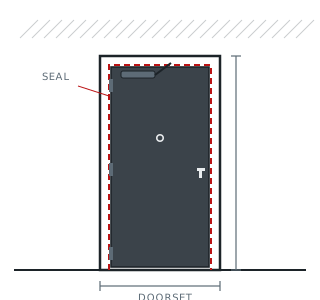
Flat Entrance Fire Doors
FD30S front doors for flats — fire, smoke and security in one certified set.
View doorsets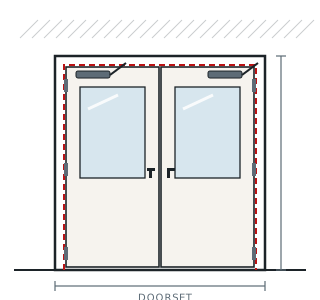
Communal & Corridor Fire Doors
Cross-corridor and lobby doors that keep escape routes clear of smoke.
View doorsets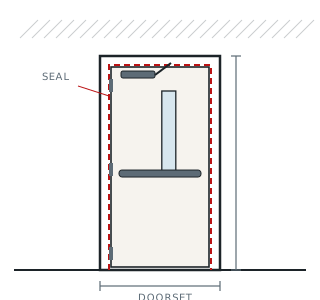
Stairwell & Escape Route Doors
Doors onto protected stairs and escape routes, specified to the fire strategy.
View doorsetsFD30S Smoke Control Doorsets near you
We supply and fit FD30S fire doors across the UK. Choose your area for local guide prices and the rules that apply there.
- Bedfordshire
- Berkshire
- Bristol
- Buckinghamshire
- Cambridgeshire
- Cheshire
- Cornwall
- Cumbria
- Derbyshire
- Devon
- Dorset
- County Durham
- East Riding of Yorkshire
- East Sussex
- Essex
- Gloucestershire
- Greater London
- Greater Manchester
- Hampshire
- Herefordshire
- Hertfordshire
- Isle of Wight
- Kent
- Lancashire
- Leicestershire
- Lincolnshire
- Merseyside
- Norfolk
- North Yorkshire
- Northamptonshire
- Northumberland
- Nottinghamshire
- Oxfordshire
- Rutland
- Shropshire
- Somerset
- South Yorkshire
- Staffordshire
- Suffolk
- Surrey
- Tyne and Wear
- Warwickshire
- West Midlands
- West Sussex
- West Yorkshire
- Wiltshire
- Worcestershire
- Clwyd
- Dyfed
- Gwent
- Gwynedd
- Mid Glamorgan
- Powys
- South Glamorgan
- West Glamorgan
- Aberdeen & Aberdeenshire
- Dundee & Angus
- Argyll & Bute
- Ayrshire
- Dumfries & Galloway
- Edinburgh & the Lothians
- Fife
- Forth Valley
- Glasgow & Dunbartonshire
- Lanarkshire
- Renfrewshire & Inverclyde
- Perth & Kinross
- Highlands, Moray & Islands
- Scottish Borders
- County Antrim
- County Armagh
- County Down
- County Fermanagh
- County Londonderry
- County Tyrone