
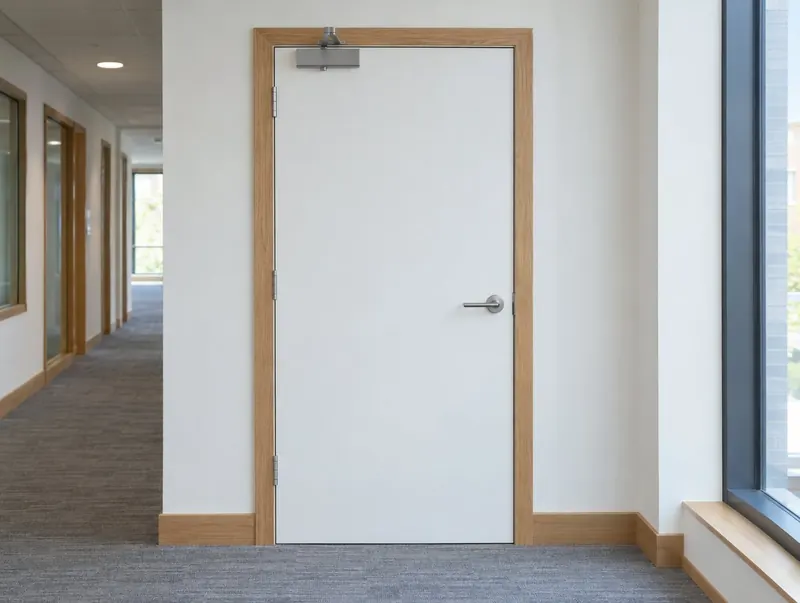
Why gaps matter
Intumescent seals are sized to close a specific gap. If the gap is larger than the evidence allows, the seal may not close it in time. Smoke seals also need even contact along the edge.
What about the bottom gap?
The threshold gap depends on the doorset. Some evidence allows a larger gap at the bottom; smoke control doors may need a smaller gap or a drop-down seal. The manufacturer's instructions are the reference.
What if my gaps are wrong?
Slightly tight or uneven gaps can often be corrected by adjusting hinges. Large gaps usually mean the leaf, frame or both need replacing — packing the edge with timber strips is rarely covered by evidence.
Common questions
Can I fix large fire door gaps with a bigger seal?
Only if the manufacturer's evidence allows that seal for that gap — usually it doesn't.
How do I measure a fire door gap?
With a gap gauge or feeler gauges at several points along each edge with the door closed.
Doorsets mentioned in this guide
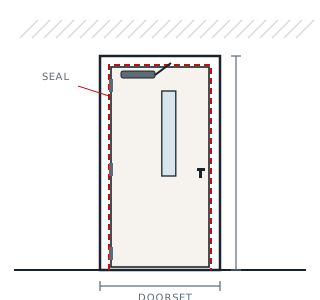
Fire Door Replacement
Failed or unknown doors replaced with complete certified doorsets.
View doorsets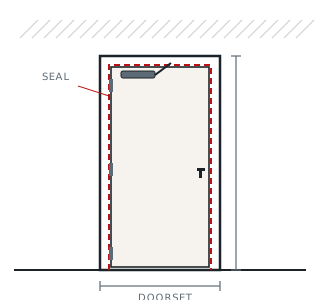
Fire Door Supply & Fit
Survey, certified doorset, installation and handover — one fixed quote.
View doorsets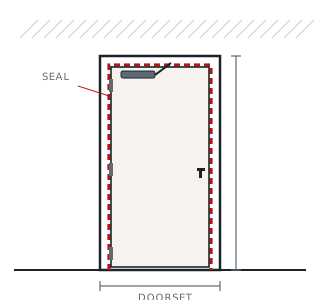
FD30S Smoke Control Doorsets
30-minute doorsets with tested smoke seals for flats, corridors and stairs.
View doorsetsMore guides
- Glass in fire doors: what's allowed?
- Who is responsible for flat front fire doors?
- BS 476 is leaving Approved Document B: what changes for fire doors?
- Your fire doors failed a regulation 10 check: what next?
- Do you need fire doors for a loft conversion?
- Repair or replace: can a fire door be fixed?
- What is a fire door and how does it work?
- Which fire door signs do you need?