
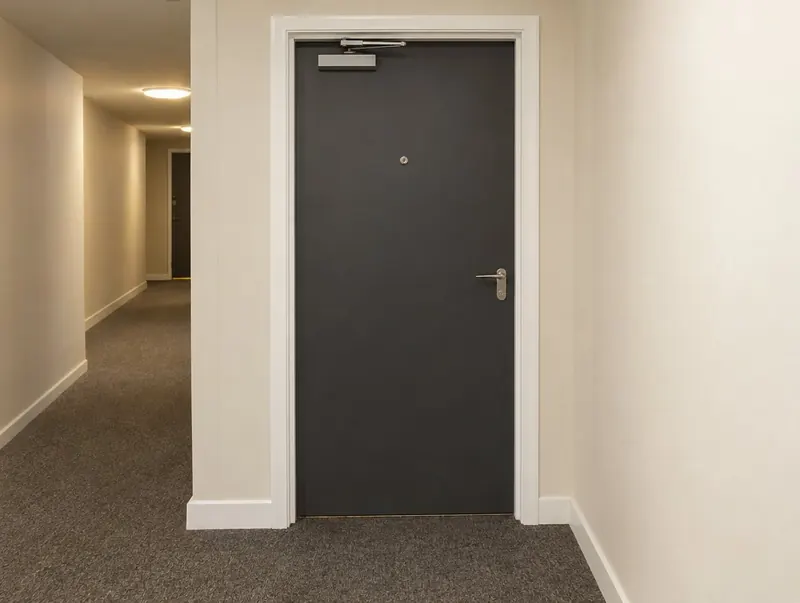
Flat Entrance Fire Doors at a glance
| Fire & smoke | FD30S / E30 Sa as standard |
|---|---|
| Security | PAS 24:2022 options; Approved Document Q requires PAS 24 or equivalent for new dwellings in England |
| Hardware | Self-closer, multipoint or nightlatch, fire-rated spyhole and letterplate where tested |
| Materials | Timber, composite or steel-faced |
| Acoustic | Acoustic-rated options for noisy corridors |
| Guide price | £1,250–£2,300 per door, supplied & fitted, ex VAT |
What the law expects of flat front doors
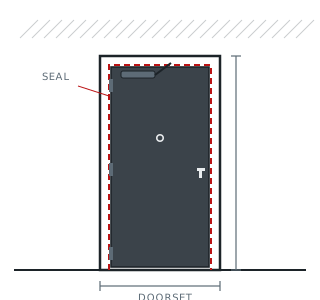
In England, Approved Document B treats the flat entrance door as part of the protection for the common escape route, so the usual requirement is FD30S with a self-closing device. The Fire Safety Act 2021 confirmed that, in England and Wales, flat entrance doors in multi-occupied residential buildings are covered by the Regulatory Reform (Fire Safety) Order 2005. Scotland and Northern Ireland have their own building standards and fire safety law.
In England, regulation 10 of the Fire Safety (England) Regulations 2022 requires the responsible person in buildings with a storey above 11 metres to use best endeavours to check flat entrance doors at least every 12 months, and communal fire doors at least every three months. Doors that fail need repair or replacement — this is where we come in.
Security as well as fire
For new dwellings in England, Approved Document Q requires doorsets giving access to a dwelling to meet PAS 24 or an equivalent standard. Many landlords choose PAS 24 for replacements too. A door can only claim both if it was tested for both in the same configuration, with the same lock, letterplate and spyhole.
Composite, timber or steel?
Timber FD30S doorsets are easy to paint or veneer to match a corridor. Composite doors offer a low-maintenance factory finish. Steel-faced doors suit high-security or high-abuse locations. After government testing in 2018 several composite flat entrance door ranges were withdrawn, so whichever you choose, we put the current certificate reference on the quote for the exact door. See composite fire doors.
Replacing doors across a block
For freeholders, managing agents and housing providers we survey every door, schedule each by flat, and programme fitting to keep residents disrupted for as little time as possible — typically a few hours per door, with each door planned to be removed and replaced the same day.
Where are flat entrance fire doors used?
- Blocks of flats
- Converted buildings with shared stairs
- Student and build-to-rent blocks
- Supported housing
Flat entrance fire doors questions
Who is responsible for flat front fire doors?
Usually the freeholder or managing agent as the responsible person, but leases vary — some make the leaseholder responsible for the door. Either way, it falls within the building's fire risk assessment.
Can I fit my own new front door to my flat?
Only with a doorset that meets the building's fire and smoke requirements, and usually with the freeholder's consent. A non-compliant replacement can put the whole building at risk.
Does a flat entrance door need a letterbox?
No. Many blocks avoid letterplates altogether. Where one is wanted, it must be fire-rated and tested in that doorset.
How long does fitting take?
A single flat entrance doorset usually takes a few hours to fit, including the new frame. Each door is planned to be removed and replaced the same day; if that isn't possible, the opening is made secure and we tell you in advance.
Related doorsets
FD30S Smoke Control Doorsets
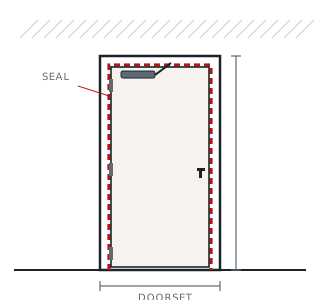
30-minute doorsets with tested smoke seals for flats, corridors and stairs.
View doorsets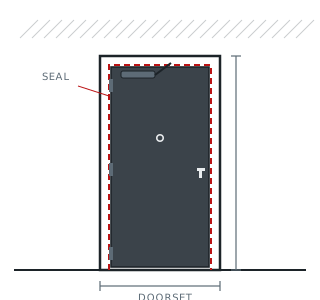
Composite Fire Doors
Factory-finished FD30S composite doors for flat entrances and external doors.
View doorsets
Security Fire Doors
Doorsets tested for both fire and attack: PAS 24 and LPS 1175 options.
View doorsets
Communal & Corridor Fire Doors
Cross-corridor and lobby doors that keep escape routes clear of smoke.
View doorsetsFlat Entrance Fire Doors near you
We supply and fit flat entrance fire doors across the UK. Choose your area for local guide prices and the rules that apply there.
- Bedfordshire
- Berkshire
- Bristol
- Buckinghamshire
- Cambridgeshire
- Cheshire
- Cornwall
- Cumbria
- Derbyshire
- Devon
- Dorset
- County Durham
- East Riding of Yorkshire
- East Sussex
- Essex
- Gloucestershire
- Greater London
- Greater Manchester
- Hampshire
- Herefordshire
- Hertfordshire
- Isle of Wight
- Kent
- Lancashire
- Leicestershire
- Lincolnshire
- Merseyside
- Norfolk
- North Yorkshire
- Northamptonshire
- Northumberland
- Nottinghamshire
- Oxfordshire
- Rutland
- Shropshire
- Somerset
- South Yorkshire
- Staffordshire
- Suffolk
- Surrey
- Tyne and Wear
- Warwickshire
- West Midlands
- West Sussex
- West Yorkshire
- Wiltshire
- Worcestershire
- Clwyd
- Dyfed
- Gwent
- Gwynedd
- Mid Glamorgan
- Powys
- South Glamorgan
- West Glamorgan
- Aberdeen & Aberdeenshire
- Dundee & Angus
- Argyll & Bute
- Ayrshire
- Dumfries & Galloway
- Edinburgh & the Lothians
- Fife
- Forth Valley
- Glasgow & Dunbartonshire
- Lanarkshire
- Renfrewshire & Inverclyde
- Perth & Kinross
- Highlands, Moray & Islands
- Scottish Borders
- County Antrim
- County Armagh
- County Down
- County Fermanagh
- County Londonderry
- County Tyrone