
The Fire Safety Act 2021
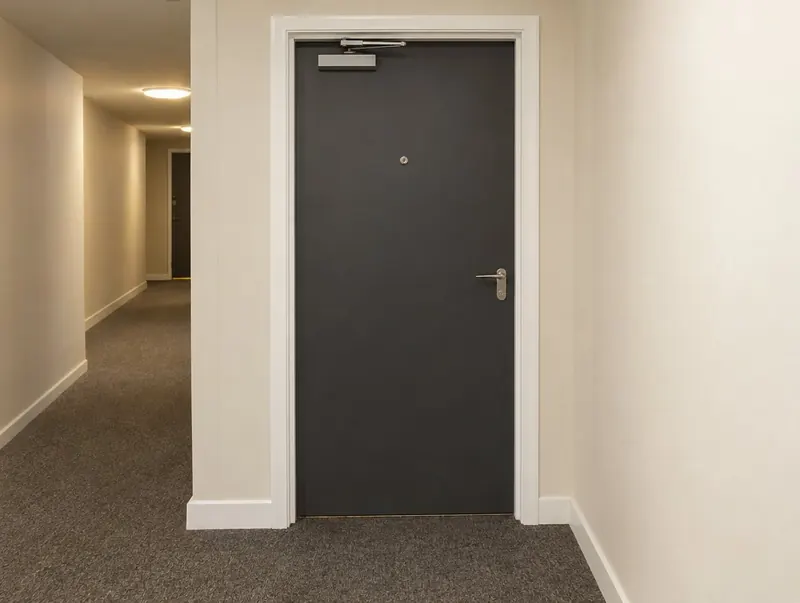
The Act clarified that, in multi-occupied residential buildings, the Fire Safety Order covers the structure, external walls and doors between domestic premises and common parts — including flat entrance doors.
Regulation 10 in England
In any block with two or more flats and common parts, the responsible person must give residents information about fire doors. Where a storey is above 11 metres, they must also use best endeavours to check flat entrance doors at least every 12 months and communal fire doors at least every three months.
What leaseholders should know
Don't replace your front door without checking your lease and the freeholder's requirements. A non-compliant door puts everyone in the building at risk. If you do replace it, it must be a certified FD30S doorset appropriate to the building.
Common questions
Can a leaseholder be required to replace their door?
Depending on the lease, yes. The freeholder may also replace doors as part of a building-wide programme.
Do flat entrance doors need a self-closer?
Yes, flat entrance doors onto common parts are expected to be self-closing.
Doorsets mentioned in this guide
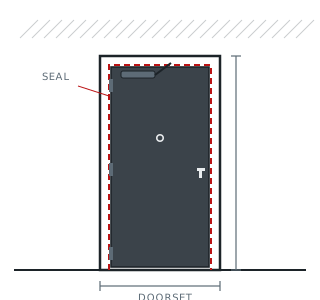
Flat Entrance Fire Doors
FD30S front doors for flats — fire, smoke and security in one certified set.
View doorsets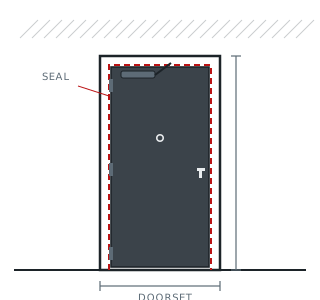
Composite Fire Doors
Factory-finished FD30S composite doors for flat entrances and external doors.
View doorsets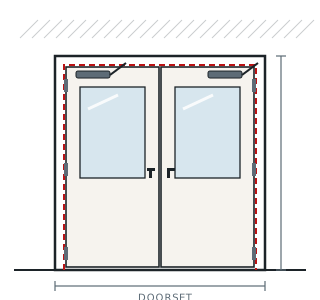
Communal & Corridor Fire Doors
Cross-corridor and lobby doors that keep escape routes clear of smoke.
View doorsetsMore guides
- Do you need fire doors for a loft conversion?
- How much does a fire door cost to supply and fit in 2026?
- What is a fire door and how does it work?
- How to check a fire door is certified
- Glass in fire doors: what's allowed?
- Fire door closers: how to choose and adjust them
- FD30 vs FD60: which fire door rating do you need?
- Fire door ratings explained: FD, E, EI and S