
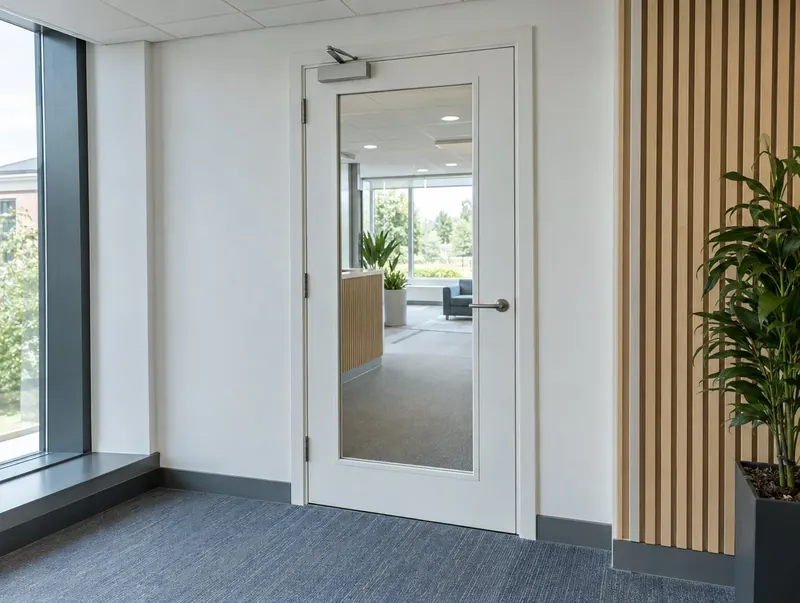
Types of fire-resistant glass
Integrity-only glasses include specially toughened and ceramic types. Insulating glasses use clear intumescent interlayers that turn opaque in a fire, blocking heat. Insulating glass is thicker, heavier and more expensive.
Why you can't just add a vision panel
Cutting a hole in a fire door and glazing it creates an untested assembly. Glazed fire doors should be factory-made or glazed to the manufacturer's tested method.
Replacing broken fire glass
Replace like for like — same glass type, beads and seals. Swapping to ordinary safety glass means the door is no longer a fire door.
Common questions
How big can a vision panel be?
As big as the doorset's evidence allows — this varies widely between products.
Is Georgian wired glass still acceptable?
Existing wired glass may still be acceptable if it's the right type and undamaged, but modern clear fire glass is now normal.
Doorsets mentioned in this guide
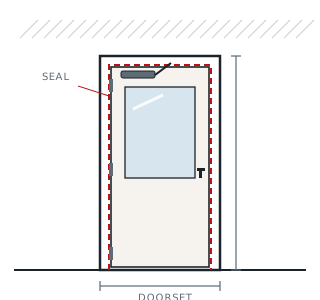
Glazed Fire Doors
Vision panels and fully glazed doorsets with tested fire-resistant glass.
View doorsets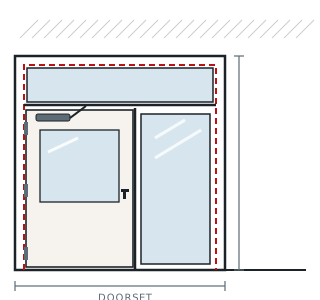
Fire-Rated Screens & Fanlights
Glazed side screens, overpanels and fanlights tested with the door.
View doorsets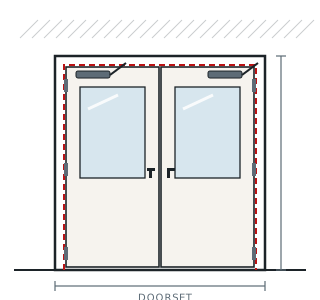
Communal & Corridor Fire Doors
Cross-corridor and lobby doors that keep escape routes clear of smoke.
View doorsetsMore guides
- How much does a fire door cost to supply and fit in 2026?
- Which fire door signs do you need?
- BS 8214:2026: what the new fire door code of practice changes
- Fire door requirements for HMOs
- Do you need fire doors for a loft conversion?
- Fire door ratings explained: FD, E, EI and S
- Who is responsible for flat front fire doors?
- What gaps should a fire door have?