
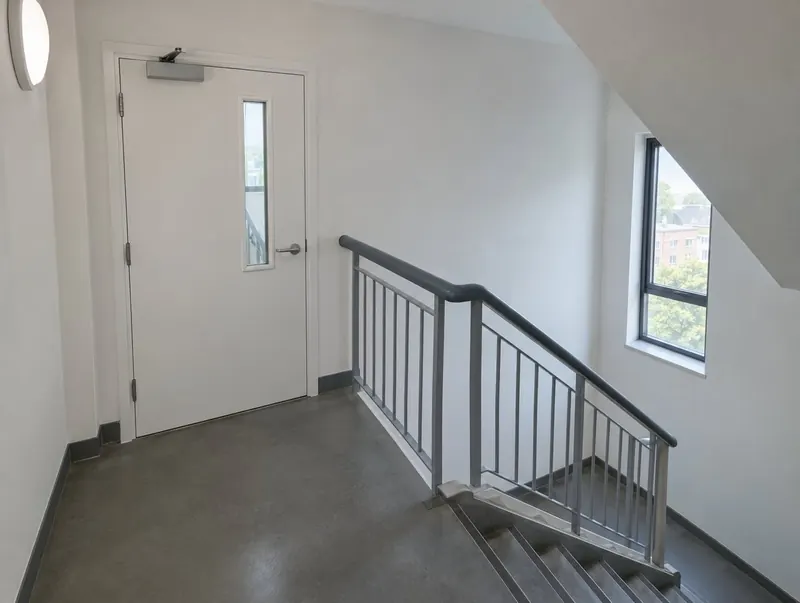
The three common signs
- Fire door keep shut — self-closing fire doors, both faces
- Fire door keep locked — cupboards, risers and stores kept locked
- Automatic fire door keep clear — doors held open on alarm-linked devices
Which doors are exempt?
Doors within dwellings, flat entrance doors and some hotel bedroom doors are usually exempt from signage. Your fire risk assessment should confirm.
Do signs affect the fire rating?
Signs are fixed to the face with adhesive or small fixings and don't affect the rating, but avoid drilling through to the core with large fixings.
Common questions
Do you supply signs with new doors?
Yes — we fit the correct sign for each door's use as part of installation.
Do signs need to be on both sides?
For most self-closing fire doors in common parts and workplaces, yes.
Doorsets mentioned in this guide
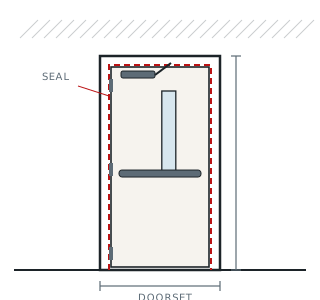
Stairwell & Escape Route Doors
Doors onto protected stairs and escape routes, specified to the fire strategy.
View doorsets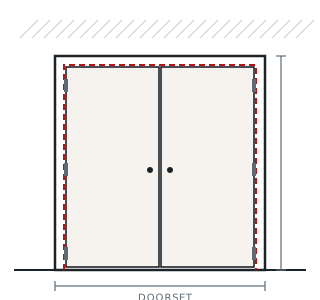
Riser & Service Cupboard Doors
Flush fire-rated doors for risers, meter cupboards and service ducts.
View doorsets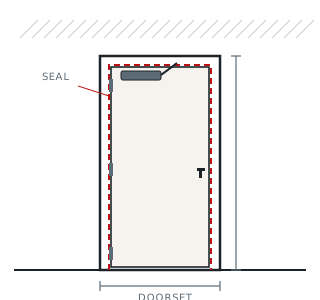
Fire Door Ironmongery & Closers
Closers, hinges, hold-open devices, seals and signs — tested for the door.
View doorsetsMore guides
- Glass in fire doors: what's allowed?
- What gaps should a fire door have?
- How much does a fire door cost to supply and fit in 2026?
- What is a fire door and how does it work?
- FD30 vs FD60: which fire door rating do you need?
- How to check a fire door is certified
- Fire door ratings explained: FD, E, EI and S
- Your fire doors failed a regulation 10 check: what next?