
What the LACORS guidance says
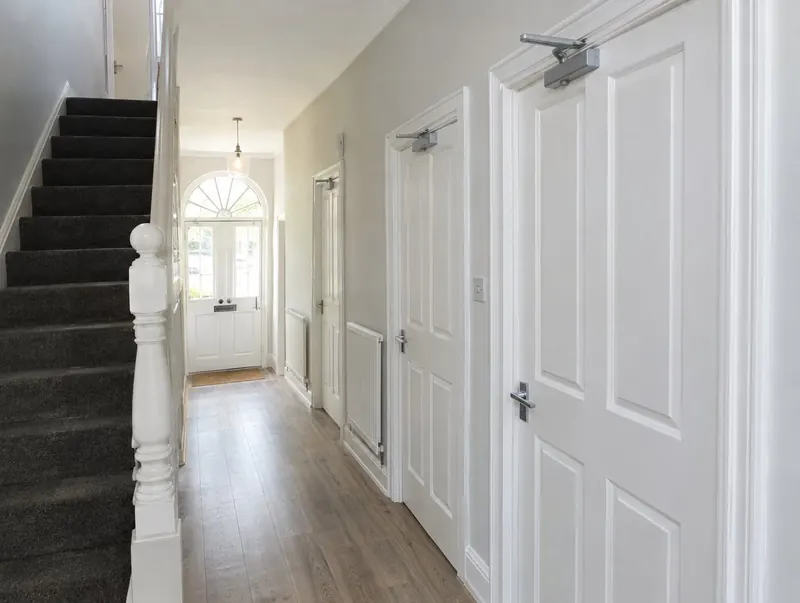
The LACORS guide sets out risk-based fire safety measures for different HMO types. In low-risk two-storey shared houses, sound, close-fitting doors may be acceptable; in three-storey houses and bedsit-type HMOs, 30-minute fire doors with self-closers onto the protected escape route are typical. Smoke seals are added where the council or the risk assessment requires them.
Locks on bedroom doors
Tenants must be able to leave without a key, so bedroom doors usually need thumb-turn locks on the inside. The lock must be suitable for the fire door.
Licensing and inspections
Councils may inspect before granting or renewing a licence. Having certified doorsets with paperwork ready makes that process easier.
Common questions
Do bathroom doors in an HMO need to be fire doors?
Not usually, unless the layout or risk assessment requires it.
Can I upgrade old panelled doors instead?
Sometimes, using tested upgrade methods, but replacement is often simpler and easier to evidence.
Doorsets mentioned in this guide
HMO Fire Doors
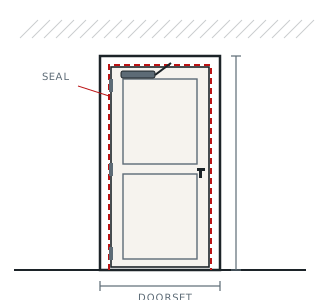
FD30 and FD30S doors and closers for houses in multiple occupation, room by room.
View doorsets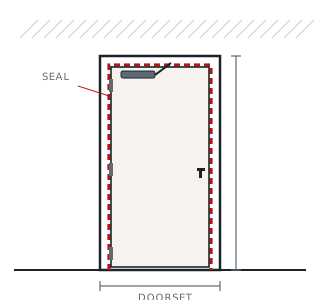
FD30S Smoke Control Doorsets
30-minute doorsets with tested smoke seals for flats, corridors and stairs.
View doorsets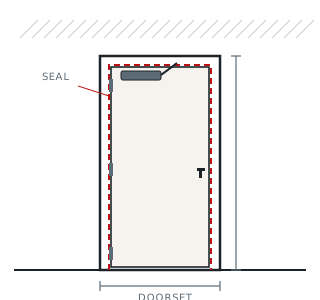
Fire Door Ironmongery & Closers
Closers, hinges, hold-open devices, seals and signs — tested for the door.
View doorsetsMore guides
- Repair or replace: can a fire door be fixed?
- What gaps should a fire door have?
- How to check a fire door is certified
- Which fire door signs do you need?
- Who is responsible for flat front fire doors?
- BS 476 is leaving Approved Document B: what changes for fire doors?
- Do you need fire doors for a loft conversion?
- BS 8214:2026: what the new fire door code of practice changes