
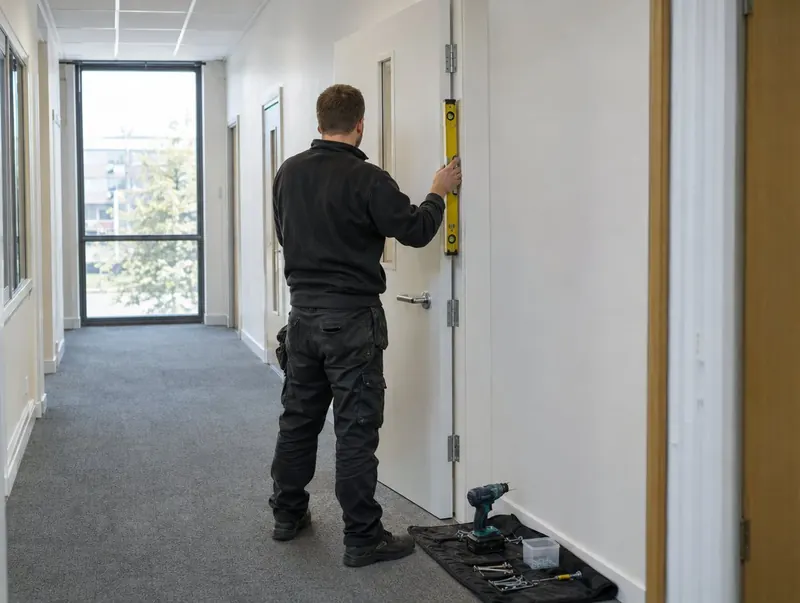
From timber to every material
The 2016 edition focused mainly on timber. The 2026 edition brings metal and composite fire doors under one code of practice, covering doorsets, door assemblies and door kits as complete systems.
Installation and frame-to-structure sealing
Guidance on sealing the gap between frame and wall has been improved, including acceptable materials such as stone wool, mastic and foam where the evidence supports them. Clauses that were often misread have been tightened to reduce non-compliant installations.
Smoke control and the wider rules
Smoke control guidance has been clarified and aligned with BS 9991, and the standard reflects duties under the Building Safety Act and the Fire Safety Act.
What it means for you
If you are commissioning doors, expect installers to work to BS 8214:2026 and to evidence their work. We install to the manufacturer's instructions and the current code of practice.
Common questions
Is BS 8214 law?
No — it is a code of practice. But it is widely used to judge whether work was done properly.
Does BS 8214:2026 cover steel doors?
Yes. Unlike the 2016 edition, it covers metal and composite doors as well as timber.
Doorsets mentioned in this guide
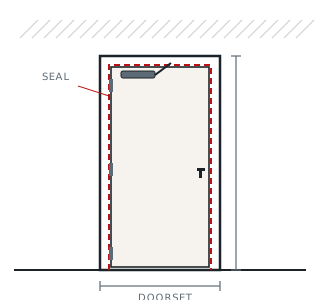
Fire Door Supply & Fit
Survey, certified doorset, installation and handover — one fixed quote.
View doorsets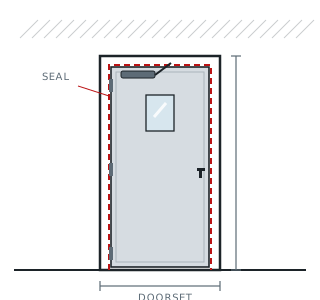
Steel Fire Doors
Tough steel doorsets from FD30 to FD240 for plant, industrial and back-of-house.
View doorsets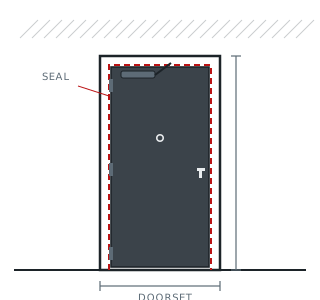
Composite Fire Doors
Factory-finished FD30S composite doors for flat entrances and external doors.
View doorsetsMore guides
- Who is responsible for flat front fire doors?
- Which fire door signs do you need?
- BS 476 is leaving Approved Document B: what changes for fire doors?
- How much does a fire door cost to supply and fit in 2026?
- What is a fire door and how does it work?
- What gaps should a fire door have?
- Fire door ratings explained: FD, E, EI and S
- Fire door requirements for HMOs