
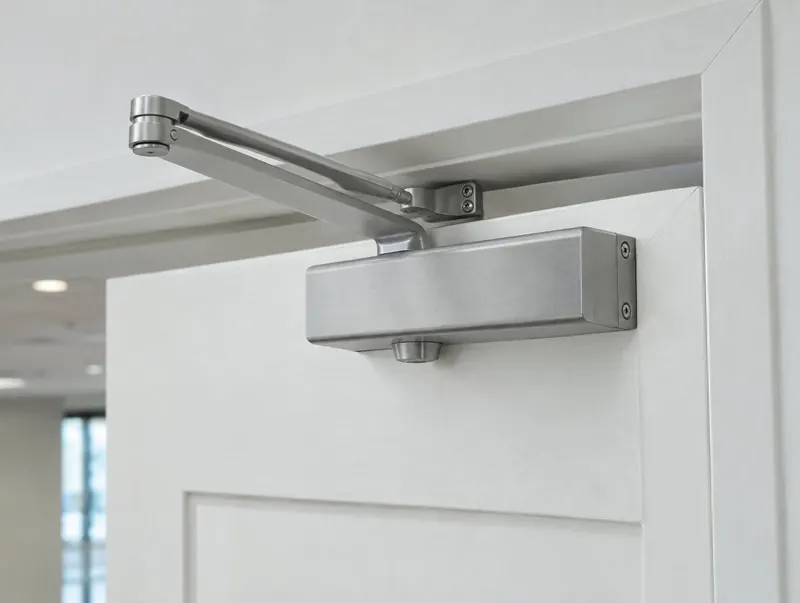
Choosing the right power size
Closers are rated EN1 to EN7. Standard internal fire doors usually need EN3 or EN4; wide or heavy leaves need more. Too weak and the door won't latch; too strong and it fails accessibility limits.
Opening forces and accessibility
Approved Document M limits opening force at the leading edge to 30N from 0° to 30° and 22.5N from 30° to 60°. Cam-action and adjustable closers help achieve both reliable closing and easy opening.
Adjusting a closer
Most closers have separate valves for closing speed and latching speed, plus backcheck. Adjust so the door closes steadily and the latch engages fully. If the door still won't latch, the problem may be hinges, gaps or the strike — not the closer.
Common questions
Can I take a closer off a fire door?
Not unless it's a cupboard or riser door kept locked shut.
Are concealed closers allowed?
Yes, if covered by the doorset's evidence.
Doorsets mentioned in this guide
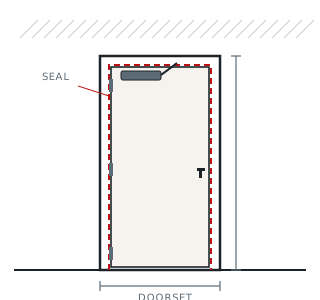
Fire Door Ironmongery & Closers
Closers, hinges, hold-open devices, seals and signs — tested for the door.
View doorsets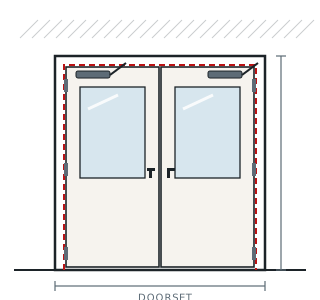
Communal & Corridor Fire Doors
Cross-corridor and lobby doors that keep escape routes clear of smoke.
View doorsets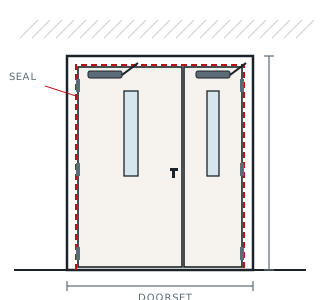
Double & Leaf-and-a-Half Fire Doors
Pairs and unequal pairs for wide corridors, beds, trolleys and plant access.
View doorsetsMore guides
- What is a fire door and how does it work?
- Your fire doors failed a regulation 10 check: what next?
- Glass in fire doors: what's allowed?
- BS 8214:2026: what the new fire door code of practice changes
- Do you need fire doors for a loft conversion?
- How to check a fire door is certified
- Fire door ratings explained: FD, E, EI and S
- Fire door requirements for HMOs